Saturday, March 5, 2011

David Otti Gulu football giant is dead

Citizen of Gulu, Northern Uganda and the world at large are experiencing grief following the death of two of their most prolific personalities on Thursday. Gulu born former Uganda Cranes and current Express FC Coach David Otti died in the early hours of Thursday afternoon at case Medical Center in Kampala, following a sustained battle with diabetes. David Otti, was one of the most decorated persons in Ugandan football he was 71. Otti is best remembered as one of the most successful coaches in Ugandan football and led giants Express, SC Villa and KCC FC to multiple titles in a career that dates back to the 1960s when he played for Bitumastic FC and the Uganda Cranes.

Otti has coached Express, SC Villa and Kampala City Council whom he led to several top trophies. He also served as Uganda Cranes coach when the national teams qualified for the Africa Cup of Nation in Cairo (1974) and Ethiopia (1976). He briefly had short coaching spells in Somalia and Rwanda.

Otti was also a former general secretary of the National Council of Sports and at the time of his death coached Express FC. The Minister of Sports, Charles Bakabulindi expressed sadness at Otti’s death today and said Uganda’s has lost one of its veteran coaches and most noticeable soccer personalities. Many people say though he was very knowledgeable about sports in the country, he was humble and respectful with his life. David Otti and Peter Okee (RIP) are the men most would like to emulate. The duo not only led the Cranes to regional glory in the seventies, but also followed up with appearances on the continental stage. Otti, who had featured as a midfielder in the continental finals in the sixties, was the man in charge before that golden performance when Okee led Uganda to the 1978 final. Uganda has since won eight CECAFA titles though a slot in the continent’s top tournament remains elusive.

Those were the days of Peter Okee, Pady Okech, Ddibya, Ouma, Massajage and many more whose mantle the gang of Omondi, Tom Lwanga, Nsereko, Mubiru Tank.

He extended his skill across the region to work at Kenyan side Gor Mahia (1981-83), Somalia’s Mogadishu Municipal Council (1987-1990) and Rwanda’s outfit APR (1995-96) plus serving as National Council of Sports (NCS) general secretary.

It’s at Express where Otti is revered most having brought the club their first league title in almost two decades back in 1993. He also won three Uganda Cup titles while there. The former Ugandan international was also in charge of the Ugandan teams that qualified for the Africa Cup of Nations in Cairo (1974) and Ethiopia (1976). The philosophical Otti, who also deputised coach Bobby Williamson in the last futile Nations Cup campaign, was never lost on hope.

The former Ugandan international footbal coach, was also in charge of the Ugandan teams that qualified for the Africa Cup of Nations in Cairo (1974) and Ethiopia (1976). The philosophical Otti, who also deputised coach Bobby Williamson in the last futile Nations Cup campaign, was never lost on hope. “We can remember yesterday but for tomorrow, we only hope,” he explained his feelings after the amputation last year. Indeed, hope is his legend continues.

Paying tributes ------------------- Many credit Otti for having discovered Philip Omondi and Magid Musisi, arguably the best two players this country has ever known.

Tom Lwanga, team manager Simba FC: Otti was a different coach. He had love and care for his players. He is one person who never blamed anyone when he commits a mistake. Football has lost a philosopher and may his soul rest in peace.

Matia Lule, head coach KCC FC: David has been like a parent. He taught me very many things in football. I looked at him beyond being a father to a grandfather. I thank God for his life. He made me what l am today.

Jimmy Ssemugabi, Fifa instructor: He has been like a brother. We met in 1962 and we were very tight. We used to play in the same positions, in defence and midfield. I thank God that l got a chance to train him in Coffee SC in the 70’s until he left. Nothing l can say except thank God for his life. Muhamood Kateregga, Team manager Express FC: I referred to him as the godfather of football and teacher. He built me and coached me when l was in the youth side - U20. At Express, he wasn’t after money but teaching football which is not the case today.

Hassan Mutasa, Otti’s best friend: I knew much about him but what l can say is that; l met Otti when he had just come out from school in Gulu. We used to share the same house and play football together. Football in Uganda has lost a true coach and an administrator.

Sam Ssimbwa, head coach Express FC: He was a mentor and used to guide me on different issues off and on the pitch. The country has lost a lot. He was an open-minded man. As someone who worked with him, Otti was old but had the idea of football. I will miss him and may his soul rest in peace.

David Obua, Cranes player: I am so gutted, so gutted! I don’t know what to say! It hurts. It is just like when my dad passed away. I shed so many tears.

Uganda will remember Otti in the lining up alongside the likes of, Peter Okee, Polly Ouma, Hassan Mutaasa, Alex Oundo, John Kaddu, Samuel Kawadwa plus the fantastic goal-keeping pair of George Bukenya and Patrick Nathan!!Last but not least David Otti was the real pride of the North when it come to the football!! God has decided that it is time to leave without bidding goodbye!! ACHOLI AND THE WORLD AT LARGE WILL MISS YOU!!


Friday, March 4, 2011

Northern Uganda lost another great son

Resident Commissioner for Gulu District, in Northern Uganda, Col. Walter Ochora, died at International Hospital Kampala on Thursday, as a result of a lung condition and respiratory problems, explained Dr. Ian Clarke.

According to the President General of Democratic Party (DP) Norbert Mao, “Col. Walter Ochora was among the few people in the National Resistance Movement with a heart for peace, development and unity whose administrative skills would be greatly missed.” Mao also lamented that Ochora has died at the time ..."when the country wanted him most... he was undoubtedly one of the country’s heavyweights."concluded Mao.

COL. Walter Ochora Odoch was born on February 3, 1957. He went to St. Joseph Layibi College where he studied from senior and completed six in 1972.

After secondary education he joined Munduli national army leadership school in Tanzania in 1981, from where he graduated as a second lieutenant.

He served in the UNLA from 1982 to 1985 under Col. Eric Odwar as a senior commander. Ochora announced the fall of the Milton Obote II government in 1985 after the troops loyal to Tito Okello and Bazilio Okello captured the city. He served under Tito Okello Lutwa’s government as senior commander from 1985-1986.

Ochora was one of the senior army officers who commanded a rebel UPDA brigade together with Odong Latek in 1986. A year later in 1987 he was a key figure in Acholi peace talks which resulted in the signing of the peace agreement between NRA and the UPDA.

Ochora was later absorbed into the NRA and was appointed a brigade commander. He was involved in the operations to pacify northern Uganda, Teso, Mbarara and Kasese in western Uganda.

In 1996 he was elected Gulu district chairman until 2006 when he was defeated by DP’s Norbert Mao. He was then appointed Gulu RDC, until 2010 to seek re-election as Gulu LC5 chairman but was defeated by FDC’s Martin Ojara Mapenduzi.

Ochora is among Acholi leaders (religious and cultural) who played a cardinal role in the process of restoring peace in the region.

He was part of the team that met LRA leader Joseph Kony in the jungles of Garamba in the DR Congo in pursuance of peace. He retired from the army four years ago after serving for 25 years. Recently he graduated with a degree in development studies at Gulu
University.

Two weeks ago after his defeat in the Gulu district race, Ochora said he would retire from politics. He convened a press conference at his home and said he had wanted to serve the people of Gulu this time for the last term, but failed.

“I will not continue with politics now. I had wanted to serve for one more last term and retire from politics, but I failed. I want to concentrate on studying for my masters degree and commercial farming among other private projects. I will only accept presidential appointments within the country,” he said.

Ochora’s favourite lifetime story was of the 1985 events when he served as president for three days after the overthrow of Obote II. He said the top commanders left him stranded with power. He was writing a book about this.

-------------------------


-------------------------

Monday, February 14, 2011

Sunday Omony: The Multi talented International Fashion Model and multimedia personality from Northern Uganda

Sunday Omony was born in the war-torn region of northern Uganda. Her family migrated to Canada in 1991. Through life altering situations Sunday has persevered to become a talented plus-size model and humanitarian. She is known for being diverse with regards to look, talent and content. Sunday is a vivacious woman, standing at 5 feet, 9 inches. She has been featured as one of the "Sexiest African Women" by JAMATI. Her glowing and infectious personality has contributed to her success. Sunday is the new spokesmodel for Hearts 4 Peace. An organization committed to building peaceful hearts in families, communities and workplaces.

To date she has graced the pages of international magazines such as ZEN, FabAfriq and My Black Hair Salons. Sunday has modeled for Old Navy, Aspen, Corbis and Veer. She has also become one of the first plus-size, Ugandan models to be featured on UGPulse, Acholi Times, Sonic Eclectic, The Weekly Albertan, JAMATI, Afrikamerik and more. Sunday has hosted many events including Afrikadey 2010 and the AfroCanada Beauty Pageant. Television segments have also enjoyed Sunday's talent and beauty including NUTV and SHAW TV. She was also a guest on CBC Radio, CJSW 90.9 and CMRC Radio.
Career accomplishments aside, deeply involved in her community, Sunday founded a non-profit organization in 2004 called Immigrant Youth Empowerment Society. She has also contributed to the book All Kids Have Dreams. Sunday enjoys volunteering and being apart of positive changes in her community. She was recognized by the University of Calgary for her community service. Sunday continues to partner with organizations promoting peace and human rights. She is involved with GuluWalk, a campaign that supports war affected youth in northern Uganda.

Through hard work Sunday hopes to influence young people to give back to their communities and focus global attention to help raise awareness about refugees. In the future Sunday hopes to become a Goodwill Ambassador for the UNHCR and much more. Sunday has interests in youth issues relating to education and community leadership. She has worked and volunteered for many organizations including Unicef, Cerebal Palsy Association, The Vocational Rehabilitation Research Institute and the United Nations Association in Canada.

Sunday's dynamic energy and exotic features are getting attention. Her winning smile is captured in every photograph. She promotes healthy body image and positive self-esteem. With a growing international buzz Sunday's fashion career is on the rise. Sunday is 5'9" Hair: Black Eyes: Brown Bust: 38 Dress: 12/14 Waist: 30 Hips: 44 Shoe: 10

Take alook at her video interview below:

-------------------------

-------------------------

-------------------------

Sunday, February 6, 2011

The Lifelong Education!! A 40 years Old enrolled in form one in Kenya East Africa!!


-------------------------


-------------------------

Saturday, January 29, 2011

From Uganda to Jamaica for the arts

More than 20 years ago Omal Peter made his way from Uganda to Jamaica to visit his brother. Little did he know that his life would be forever changed and that his long-time passion for the arts was about to be rekindled.

In 1988, Peter settled at the Edna Manley College for the Visual and Performing Arts (then called the Jamaica School of Art) to begin four years of training in visual communications (formerly graphics). This was among the first tests he had to pass on his way to becoming the accomplished artist and educator he is today.

Today, Peter has two roles at the college. He is a full-time lecturer and designer and is multi-skilled in the areas of interactive media, radio and television. He spends his spare time working on a mini movie production. He works at producing children's interactive learning media using software like Macromedia Director, Adobe Premiere, Flash and other video editing software.

Among the challenges he has faced while being in Jamaica are adapting to a new culture, the new environment and keeping up with his finances. To earn his tuition, and sustain himself, he took up several jobs including one at CGR Communications Limited.

Different challenges
According to him, these challenges were less intimidating, compared to challenges faced back home in Uganda. Owing to pervasive civil unrest, since 1986, most of the nation's schools lost art facilities. This made learning the arts, which requires much material, efficient space and proper financing, very difficult. Visual art in Uganda, then, became restricted to the printing press. There was no access to art facilities and funding/sponsorship for the development of the art process was basically non-existent.

Commenting on college life, Peter describes the four years to earn a diploma/degree as very tedious and sometimes seemingly unnecessary. However, he is evidently committed to garnering all the education he can. After leaving Edna Manley College he studied at several locations, including the Ohio State University (three years) and the University of Technology (two years). His intention was to satisfy certification requirements to become more marketable.

In-between colleges, Peter operated Media Concepts, teaching production and interactive media and graphic design from his studio.Eventually, while operating his own business, he was invited to do graphic design for the Edna Manley College for the Visual and Performing Arts, which he still does while working as a lecturer. Balancing teaching and being taught plus family life is one hurdle he must now tackle in order to leap smoothly over to completing his PhD. Thanks to the CHASE Foundation, which recently awarded him sponsorship worth just under one million dollars, the aspirant, who says college life is 'all very stressful and demanding', is now well on his way to attaining his PhD

antheamcgibbon.com
--------------------


------------------------


Friday, January 28, 2011

"Mwalimu" Mzee Alipayo Lwanymoi Oloya

Mzee A.Lwanymoi Oloya, passed away on Monday, January 24, 2011 in Gulu Hospital. He had just celebrated his 90th birthday on January 21 at Pamin-Yai. He was a Selfstarter!Add Image Apart from teaching Alipayo was a well known Agriculturist, avid farmer and use a lot of modern agricultural technology in Acholi land! He instilled in all his children sense of purpose and most of the children excel well broad and at home! Some of us who were constant visitor to his home learn a lot from Mwalimu Alipayo! I grew up and studied with his children like Okota, Naros (Ogaba,/Dwoka/Oruni the younger girls Acomo, Betty, and Sara are those I could still remembered ) and many young one and older one who eventually left to study abroad)!

“Dad gave us all we needed, to be what we all want to be. He gave this world, and I mean all corners of it; teachers, Doctors, lawyers, engineers, scientists, whatever you can think of Mr Oloya had it in his family. A great man to his community too thanks for all your blessings and wisdom Dad….." Ben Oloya
He was born on January 21, 1921 in Ajumani in Madi District, where his father was posted as a Police officer, his mother a humble homemaker. Money was very tight, and with his father constantly on the move, young Alipayo was soon left behind, wasting away in Bobi village. There he would have remained were it not for a chance conversation between Bishop Usher Wilson of the Upper Nile Diocese and a parishioner. The good bishop wanted a reliable houseboy to help keep his compound clean.

The parishioner could only think of young Alipayo who proved to be a quick learner. Alipayo moved from cleaning the compound to becoming the bishop’s cook, all the while stealing time to read books that he found on the prelate’s shelves. Bishop Usher Wilson discovered that his cook was a keen learner, and enrolled him in school. Through his primary and secondary education, young Alipayo worked hard. He finally earned his way to Buwalasi Theological College where he earned a teaching certificate.

In 1942, Alipayo started teaching primary school in Ngai, near Lira in then Lango District. Restless, and perhaps a bit of an independent soul, he was moved to Boro-boro for a year. Between 1944 and 1945, he taught in Aboke and then returned to Bobi, near his village. In July 1945, he married my First Mother Alici Nora, and was moved to Kitgum where he became a headmaster and remained until 1951. He was briefly a supervising teacher in Acholi in 1951. His final stint in education was as headmaster of Gulu Primary school.

He retired in January 1955, moving to Pamin-Yai, a wilderness west of Gulu that took its name from a large rock that defiantly jutted out of the ground. Farming was back-breaking work, but Alipayo threw himself into it, becoming one of the progressive farmers of his days who used modern farming implements. He and his family live in Pamin-Yai. As a farmer he and his children worked the cotton field from morning till midnight. He grew tobacco as cash crop and tobacco required so much care from the moment of planting till it was cured in a hot barn and this requires dedicated helpers. This is where all the children learned the rope!!

Through it all, Alipayo Oloya was the perennial optimist, believing always that hard work always pays. He was also involved in municipal and district affairs, working with the Gulu District Land Board, and also as Chair of Uganda Diary Corporation. Politics seemed a big passion, but he was never quite successful at it. He did run for elective office, I think in 1970, and was defeated. Still, he read voraciously about everything, the latest journals of agriculture, learning new techniques in farming. All the while, he pushed his children to succeed in school. It was never quite good enough to return home with the report card that lacked the top score.
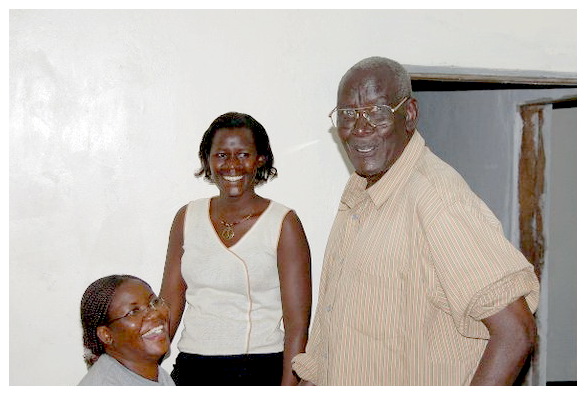
He did love all his many grandchildren. Teaching education and farming was Mzee Alipayo’s enduring passion. Among his peers and children he was affectionately, known as “Lapwony”, or “Mwalimu” in Kiswahili, -the teacher.

Mzee Alipayo is survived by 5 wives—Alice, Awilo, Esther, Akot and Judith, 29 children, 55 grandchildren and 10 great-grand children. He was loved and he loved all. He was a good man, a great teacher, and loving father. He will be laid to rest on Saturday, February 5, in Pamin-Yai, enough time for all his family and loved ones to gather.
----------------------------------

----------------------------------

Saturday, December 25, 2010

Genocide or Just Another "Casualty of War"?

The Implications of the Memo Attributed to President Yoweri K. Museveni of Uganda

by Todd David Whitmore

Editor’s Note (December 22, 2010): Dr. Todd Whitmore of the University of Notre Dame published his peer-reviewed article “‘If They Kill Us, At Least Others Will Have More Time to Get Away’: The Ethics of Risk in Ethnographic Practice” in our most recent issue (issue 3, spring 2010). In that article, Dr. Whitmore develops a theological framing of ethnography as both a research method and an ethical practice. Since the publication of “If They Kill Us,” Dr. Whitmore has been in conversation with Practical Matters about the publication of documents, dating from the 1980s, that he received while doing research in Northern Uganda (available at musevenimemo.org).

These documents attribute to the sitting President of Uganda, Yoweri Museveni, the intent to commit acts of genocide against the Acholi people, an ethnic group situated in Northern Uganda, as early as the 1980s.

Over the summer of 2010, Practical Matters undertook an academic review process, which included experts in Ugandan history and politics, to evaluate both the authenticity of these documents and the ethical implications of publishing them. While the reviewers generally supported the journal in a decision to publish the documents, Practical Matters decided that it is not the most appropriate medium in which to make these documents available.Practical Matters, the journal’s editors and advisors concluded, cannot adequately contribute to securing the safety of persons in Uganda who might face retaliation as a result of the publication of these documents.

The journal did, however, decide to publish Whitmore’s analysis of these documents, which is available here. In this piece, Whitmore examines the historical and political situation in Northern Uganda that, he thinks, renders the documents’ purported provenance and authenticity likely. He also explores the ethical implications of publishing them in an online format. The editors and advisors ofPractical Matters feel that it is important to provide Whitmore a public context in which to practice the ethic he prescribes in “If They Kill Us.”

-------------------------------------------------

MUSEVENIMEMO.ORG

-------------------------------------------------------------
Preface to the Memo Attributed to Yoweri K. Museveni, President of Uganda
December 22, 2010
Although I travel to Uganda to study traditional Acholi culture and its interaction with Christianity (I am a theologian by training), on multiple occasions people have approached me to tell me about atrocities committed by the forces of the National Resistance Army (NRA, later to become the Uganda Peoples Defense Forces or UPDF) against the people of northern Uganda both before and during the armed conflict with the Lord’s Resistance Army. Some of these people have passed documentation on to me.

On a recent trip of mine, one such person gave me the documents included on this website. One document is a memo, done on a typewriter, dated November 14, 1986, from someone codenamed “Tremor 1” to someone codenamed “Meteor Plus One.” The person who gave me the document – I will call her Ageno Komakec – told me that it is an internal memo, never meant to be circulated, from Yoweri Museveni, the current President of Uganda, to his brother Salim Saleh. The memo is signed “YKM.”
The memo, titled, “Subject: RETHINK” describes an aerial flyover of northern Uganda by Tremor 1, and his subsequent change of mind on policy towards the North. Previously, Tremor 1 thought that the victorious National Resistance Movement (NRM) should forget about the “backwards northerners,” particularly “the Chimpanzees called Acholis,” due to the lack of developmental prospects in the North. However, the flyover changed Tremor 1’s mind. There is a “Gold Mine” of fertile land in the North. Therefore, it is best that the NRM take it over. Such control, says Tremor 1, will require finding ways to “drastically reduce the population” and to “eliminate some old politicians who are likely to give us troubles.” Given the substantive content of the memo, it seemed to me to be important, even obligatory, to make it public and to pass it on to the relevant authorities. Now there can be an appropriate debate regarding its possible authenticity and, if it is authentic, its implications. I include my own analysis in an article in the journal, Practical Matters. It is an online journal, open to all, so that anyone can access it. The web address of the article is:

http://www.practicalmattersjournal.org/issue/3/analyzing-matters/genocide-or-just-another-casualty-of-war.

Readers who wish to send me their comments on either the documents or my article can do so to musevenimemo@gmail.com.
I have sent a copy of the memo, which appears below, together with the real name of the person who gave it to me to Amnesty International, Human Rights Watch, the United Nations High Commissioner for Human Rights, the United Nations Office of the Special Advisor on the Prevention of Genocide, and the International Criminal Court. These persons and organizations will be watching over the person who gave me the memo so that, in the event that the Ugandan government somehow finds out who she is, the government will know that it, too, is being watched.